Security dispatch services answer your officers’ calls, log their activity and route problems to the right person around the clock, so your managers do not have to sit by the phone all night. To outsource security dispatch well, check ten things before you sign, starting with coverage hours, escalation rules, platform access, reporting and operator training.
Use the checklist below to compare providers, then follow the steps to move your dispatch desk without leaving a post uncovered.
What do security dispatch services do for a guard company?
A security dispatch service is the communications desk between your officers in the field, your clients and your managers. In a guard company, that desk usually handles:
- Officer calls and phone or radio check-ins
- Late arrivals, call-offs and no-call, no-show follow-up
- Round checks and wellness checks on officers who work alone
- Incident calls, with escalation to a supervisor, client or police
- After-hours calls from clients and property managers
- A log of every event, so you have a record the next morning
Basic dispatch stops at answering and routing the call. The harder work is deciding what happens next: who covers an open post, when to wake a manager and what the client needs to hear. Know where a provider’s job ends before you sign, because that line decides how many calls still land on you.
Why do guard companies outsource dispatch?
Guard work runs around the clock, and your dispatch desk has to match it. The U.S. Bureau of Labor Statistics reports that security guards held about 1.3 million jobs in 2025. The same source says guards usually work rotating shifts of about 8 hours and that night shifts are common. Every one of those night and weekend shifts needs someone awake to take the officer’s call.
Most guard companies cover that desk in one of three ways. An owner or operations manager carries the phone. A small in-house team works nights. Or an outside provider takes the calls. The first option wears down your leadership. The second means hiring, training and scheduling a desk that sits idle on quiet nights and gets buried on busy ones. The third moves that load to a team that already runs a 24/7 desk.
What should you check before you outsource security dispatch?
Ask every provider the same ten questions. Their answers tell you whether you are buying a call center or an operations partner.
- Coverage hours. Confirm the desk is staffed 24/7, including holidays, and ask how they handle a spike in calls.
- Your platform, not theirs. Operators should work inside the software you already use, such as TrackTik, Belfry, Therms or StaffWizard, so your records stay in one place.
- Written escalation rules. Ask how they turn your post orders and call trees into steps operators follow for each site.
- Call-offs and open posts. Find out if operators only tell you about a call-off or work your coverage list until the post is filled.
- Check-ins and guard tours. Ask how they track missed check-ins and tour exceptions, and when they escalate an officer who does not answer.
- Incident reports. Request a sample. You want times, actions taken, who was notified and what is still open.
- Client contact. Decide whether operators speak with your clients after hours and whether they answer under your company name.
- Operator training. Ask how many hours of training operators complete before they take calls alone and how they learn your accounts.
- Data separation. If the desk serves other guard companies, ask how your client and officer data stays separate.
- Morning handoff. Ask what your team receives each day, such as a daily activity report covering shifts, incidents, attendance and rounds.
What is the difference between a dispatch service and a SOC?
A dispatch service answers and routes calls. A security operations center (SOC) built for guard companies also acts on those calls inside rules you set, then documents what it did. The table shows where the two split.
| Task | Basic dispatch service | SOC with Manager on Duty support |
|---|---|---|
| Officer calls | Answers and relays | Answers, acts and documents |
| Call-offs | Notifies a manager | Works the coverage list until the post is filled |
| Missed check-ins | Logs the miss | Follows up, then escalates under your rules |
| Incidents | Passes the call along | Escalates to supervisors, clients or police and writes the report |
| After-hours client calls | Takes a message | Handles the call and sends your team a summary |
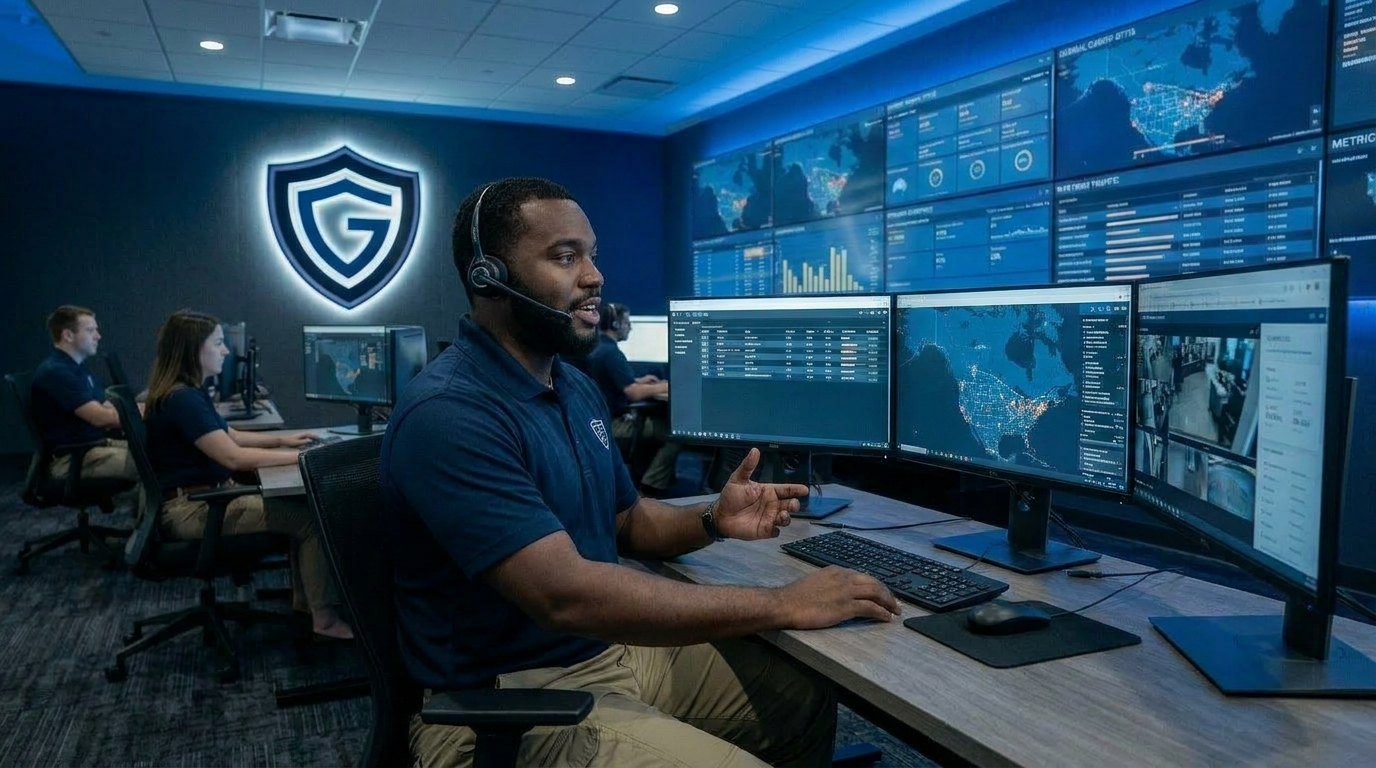
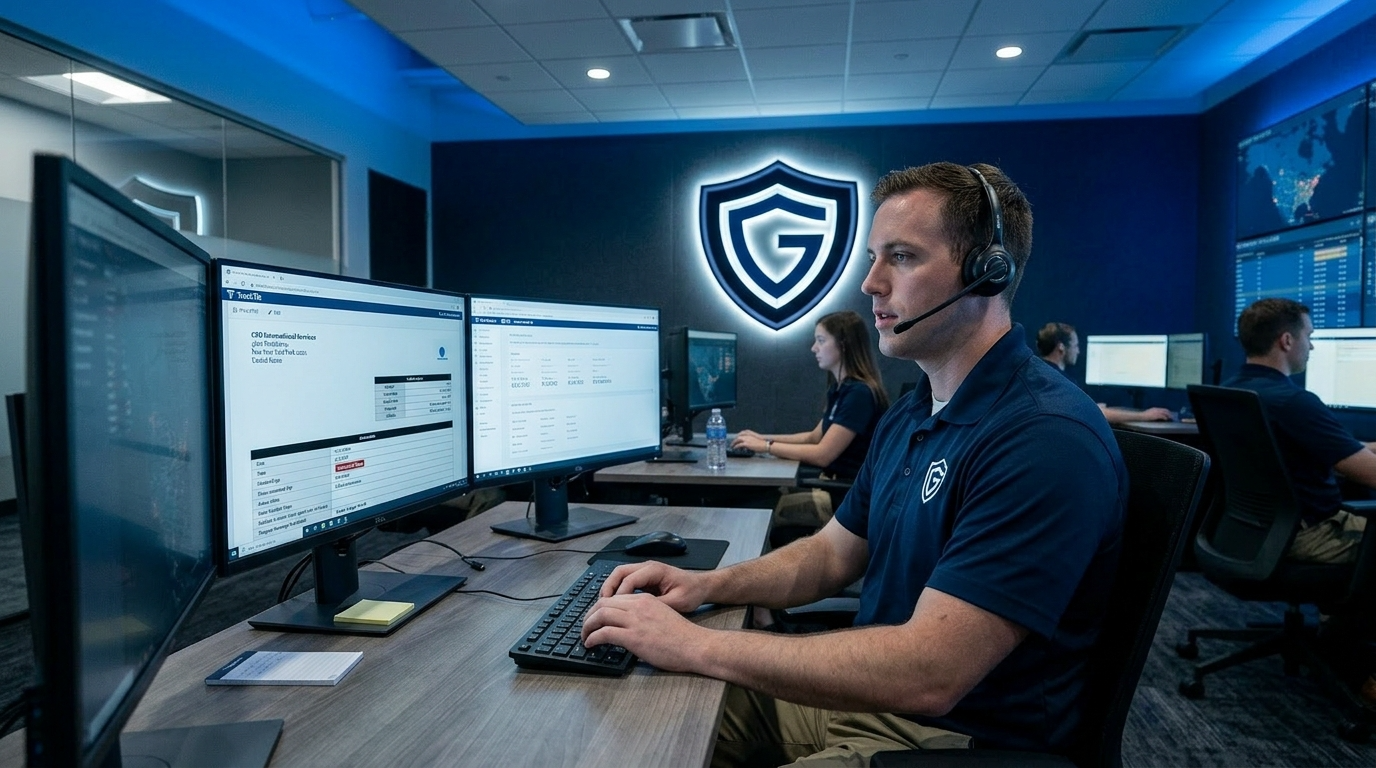
Guardian Alliance SOC operators handle dispatch calls as one part of that wider job. Our Manager on Duty service covers nights and weekends with call-off coverage, escalation management, guard tour and check-in monitoring, incident reporting and client communication. For more on the terms owners run into, read GSOC vs SOC for guard companies.
How do you move dispatch to an outside team without gaps?
Plan the handoff before you forward a single call. A clean switch usually follows these steps:
- Gather post orders, call trees and client contact lists for every site.
- Give the provider user access to your guard management platform.
- Agree on escalation thresholds, such as how long an officer can miss a check-in before a supervisor gets a call.
- Run a short overlap period where your team and the provider watch the same activity.
- Forward your dispatch line and tell officers and clients who will answer.
- Review the first weeks of reports with the provider and tighten the rules where calls still reach you.
Training matters most in the first weeks. Guardian Alliance SOC operators complete 36 hours of training before they handle calls on their own, and they learn each member’s accounts and protocols before going live.
Frequently asked questions
What does a security dispatcher do?
A security dispatcher answers officer and client calls, logs activity and routes problems to the right person. In a guard company, that includes check-ins, call-offs, incident calls and after-hours client contact.
Can an outsourced dispatch team answer under my company name?
Yes, many providers can. Guardian Alliance SOC operators work under each member’s brand and inside the member’s own platform, so your officers and clients deal with your company.
Will an outsourced dispatch team work in TrackTik or Belfry?
It should. Ask any provider to work inside the platform you already use so tours, reports and incidents stay in one system. Guardian Alliance SOC works in TrackTik, Belfry, Therms, StaffWizard and ES Chat.
Is outsourced dispatch only for small guard companies?
No. A small company might use it so the owner stops carrying the night phone. A larger company might use it to cover nights, weekends and overflow without building a full in-house desk.
Want to see how Guardian Alliance SOC operators would run your nights and weekends? Request a consultation and talk with our team.